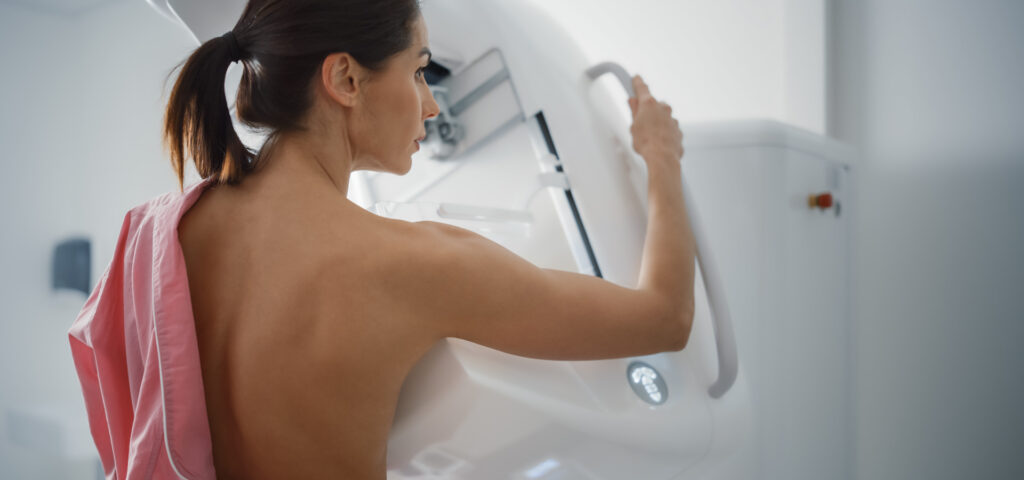
Taking care of your breast health is a lifelong journey, and knowing when to start screening mammograms can feel confusing. Should you wait until you’re 40? 50? What if you have a family history of breast cancer? At A.T. Radiology, we understand these questions weigh on your mind, and we’re here to guide you through what to expect at every stage of life.
Key Takeaways
- Most women should begin annual screening mammograms between the ages of 40 and 45, though individual risk factors may require earlier screening.
- Early detection saves lives – breast cancer found early has a 99% five-year survival rate.
- Your screening schedule should be tailored to your family history, breast density, and overall health.
- Continue screening as long as you’re in good health; there’s no specific age to stop mammograms.
Why Screening Mammograms Matter
Screening mammograms use X-ray technology to create breast images, which help detect breast cancer at an early stage before patients develop any symptoms or physical signs of the disease. The best method to detect medical changes at their most treatable stage requires you to undergo regular screening tests.
Your 20s and 30s: Building Awareness
Most women in their 20s and 30s don’t need routine screening mammograms. Focus on becoming familiar with how your breasts normally look and feel, and report any changes to your healthcare provider.
However, if you have a strong family history of breast cancer, carry genetic mutations like BRCA1 or BRCA2, or have had chest radiation therapy before age 30, your doctor may recommend earlier screening, sometimes as young as 25 or 30.
Your 40s: The Screening Decision
Most women start thinking about screening mammograms around age 40. In the U.S., women at average risk are generally advised to begin screening between ages 40 and 45, with mammograms done yearly or every two years.
Talk with your healthcare provider about your family history of breast or ovarian cancer, breast density, and your comfort with screening.
When to start mammograms is a personal decision. The most important step is making an informed choice with your doctor.
Your 50s Through 70s and Beyond: Consistent Screening
Regular mammogram screening becomes especially important in your 50s and beyond because the risk of breast cancer increases with age, and most cases are diagnosed in women over 50. For most women, annual mammograms are recommended.
As women reach their 70s and beyond, mammogram screening becomes a more personal decision, influenced by overall health and life expectancy. There is no specific age to stop mammograms, and many women in their 70s and 80s continue yearly screenings and benefit from early detection.
At A.T. Radiology, we offer advanced 3D mammography. This technology detects more invasive breast cancers than 2D mammograms and reduces false positives.
When Standard Guidelines Don’t Apply
You may need to start screening earlier or have it more often if you have high-risk factors, such as:
- BRCA1, BRCA2, or other genetic mutations
- Family history of breast cancer, especially a parent, sibling, or child diagnosed before 50
- Personal history of breast cancer
- Chest radiation between the ages of 10 and 30
If you have dense breasts, additional screening with ultrasound or MRI may help, since dense tissue can hide cancers on mammograms. We can guide you on the best screening options based on your results and risk factors.
What to Expect During Your Screening Mammogram
Understanding the process can ease anxiety about your first (or next) mammogram:
- Before Your Appointment: Avoid deodorant, powder, or lotion on your chest and underarms, as these can interfere with imaging. Schedule your mammogram when your breasts are least tender, usually the week after your period.
- Procedure: The technologist will gently press your breast to take images from different angles. The exam takes about 20 minutes.
- After Your Exam: You can resume normal activities immediately. A board-certified radiologist will read your images, and results are typically available within a few days.
Compression can feel uncomfortable, but it helps create clear images while using the lowest possible radiation. Our caring radiologists work quickly and do everything they can to keep you comfortable.
Understanding Your Results
After your mammogram, you’ll receive a report with one of these categories:
- Negative: No signs of cancer detected
- Benign Finding: Something shows up but isn’t cancer (like a cyst or calcification)
- Probably Benign: A finding that’s most likely not cancer, but requires a follow-up mammogram in 6 months
- Suspicious: Requires a biopsy to determine if it’s cancer
- Highly Suggestive of Malignancy: Strong indication of cancer; biopsy needed
If additional imaging or a biopsy is recommended, try not to panic. Most women called back for additional testing don’t have cancer. We’re here to support you through every step of the process.
Make Screening a Priority
Life is busy, but mammograms can save lives. Tips to make it easier:
- Schedule in advance: Book your next mammogram before leaving your appointment
- Set a reminder: Use your birthday month or another date each year
- Bring a friend: Make it a wellness date
- Communicate: Let staff know if you’re anxious or have questions
We’re Here for You
We deliver professional medical imaging services through our advanced 3D mammography technology. Here’s our team to support your breast health and answer questions about any mammogram, whether it’s your first or your fifth. Contact A.T. Radiology to schedule your appointment, and be sure your healthcare provider has your personal risk information for proper evaluation.
Our imaging services include: 3D Mammogram, Ultrasounds, Sonograms, X-Rays, MRI Scans, 3D Sonogram, Echocardiograms, Prostate MRI, Bone Density Scan, Arthrograms, CT Low-Dose Lung Cancer Screening, Lung Cancer Screening, CT Scan, and OB Ultrasound.