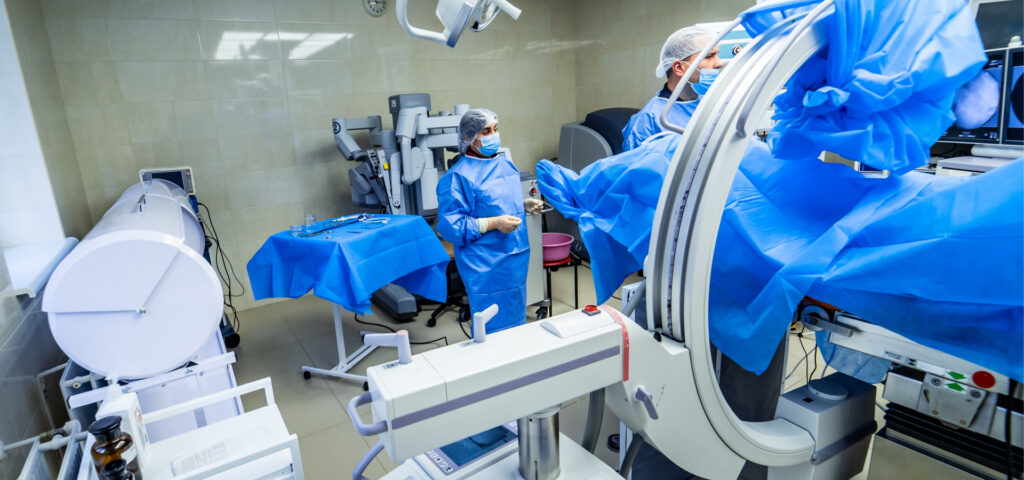
What if you could treat a tumor, clear a blocked artery, or shrink painful fibroids without a single major incision? No long hospital stay. No weeks of recovery. Just a small procedure, guided by live imaging, that gets the job done with far less disruption to your body. It is not a future technology. It exists right now, and it is called interventional radiology.
Yet most people have never heard of it until their doctor brings it up. And by that point, they are already nervous and trying to absorb a lot of information at once. So let’s change that. At A.T. Radiology, learning about your care before you ever need it is one of the best steps you can take for your health. Here is a simple, clear guide to help you understand interventional radiology and what it means for your care.
Key Takeaways
- Minimally invasive: Uses local anesthesia and mild sedation. Many patients go home the same day.
- Treats, not just diagnoses: Shrinks tumors, opens blocked arteries, drains fluid, and stops internal bleeding through a tiny skin opening.
- Real-time imaging guidance: Enables precise treatment and reduces complications.
What Makes It “Interventional”?
Traditional radiology is diagnostic. It creates images that let doctors see what’s going on inside your body. Interventional radiology (IR) takes that one step further. It uses those same imaging tools, such as ultrasound, X-ray, fluoroscopy, CT, or MRI, to guide minimally invasive procedures in real time.
Think of it this way: diagnostic imaging is the map, and interventional radiology is the GPS-guided navigation. An interventional radiologist is a physician trained through medical school, radiology residency, and a fellowship in interventional techniques. They use thin catheters, tiny needles, and specialized tools to treat conditions inside the body, often without a surgical incision. The result is precise treatment, lower risk, and faster recovery.
What Conditions Can Interventional Radiology Treat?
IR is not limited to a single specialty or patient type. Here are some of the most common conditions treated through interventional radiology.
Cancer care is one of the most impactful areas. Procedures such as tumor ablation use heat or cold to destroy cancer cells directly. Chemoembolization delivers chemotherapy right to a tumor while cutting off its blood supply. These techniques are used for liver and lung cancers, among others.
Uterine fibroid embolization (UFE) is a non-surgical treatment for uterine fibroids. A small catheter is guided to the blood vessels feeding the fibroids, and particles are injected to block their blood supply. The fibroids shrink, and symptoms improve.
Peripheral artery disease (PAD) causes arteries in the legs to narrow or become blocked. IR specialists can open blocked arteries using balloon angioplasty or stenting, restoring blood flow without open surgery.
Image-guided biopsies use real-time imaging to collect tissue samples from the exact location a doctor needs to test, with pinpoint accuracy and minimal discomfort for the patient.
Why It Matters for You
Interventional radiology has quietly become one of the most important branches of modern medicine, yet many patients don’t discover it until they are already facing a serious diagnosis.
For patients who are not good candidates for open surgery due to age or other health conditions, IR often opens a door that would otherwise be closed. For others, it means getting better faster and getting back to life sooner.
The American College of Radiology recognizes interventional radiologists as essential members of the patient care team. They work closely with your primary care physician, surgeon, and oncologist to identify the least invasive and most effective treatment options.
A.T. Radiology Is Here to Help
A.T. Radiology provides advanced imaging and diagnostic services that support patient care, including imaging used in interventional radiology procedures. Our team will assist you throughout the entire process from your biopsy referral to your imaging procedure and diagnostic scan. The more you learn about your medical treatment, the more confident you will feel throughout your care.
Our imaging services include: 3D Mammogram, Ultrasounds, Sonograms, X-Rays, MRI Scans, 3D Sonogram, Echocardiograms, Prostate MRI, Bone Density Scan, Arthrograms, CT Low-Dose Lung Cancer Screening, Lung Cancer Screening, CT Scan, and OB Ultrasound.