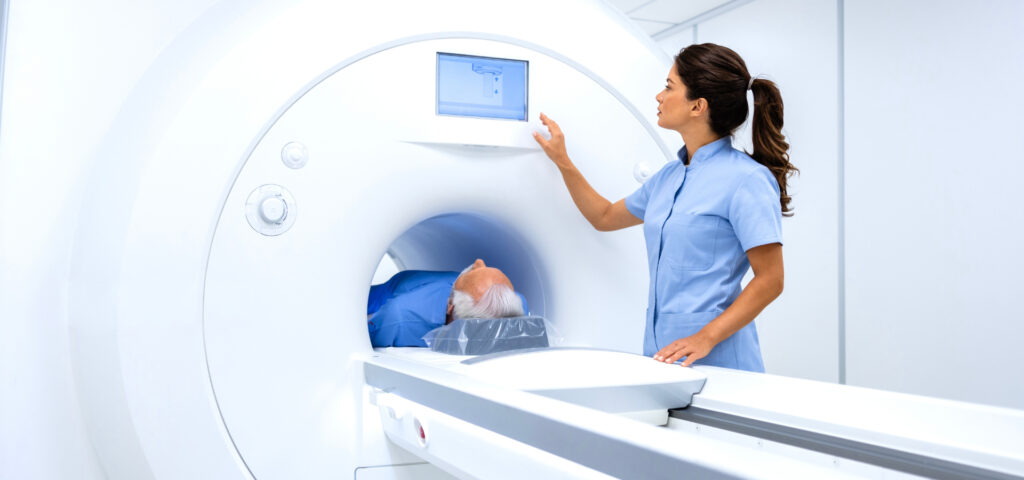
If your doctor suggests an abdominal MRI, you might wonder what it can actually show. In many cases, MRI is one of the best ways for detecting cancers in the abdomen. Understanding what MRI can and can’t show, as well as when it’s most helpful, can make you feel more confident about the test.
How MRI Works
MRI (Magnetic Resonance Imaging) uses powerful magnets and radio waves to create clear images of the body’s internal organs and tissue. Unlike CT scans, it doesn’t use radiation, making it a safer choice for people who need multiple scans or are more sensitive to radiation.
MRI is especially valuable in the abdomen because it provides excellent contrast between different soft tissues. This makes it ideal for examining organs such as the liver, pancreas, kidneys, adrenal glands, and digestive system.
Abdominal Cancers: MRI Can Detect
- Liver Cancer and Metastases– MRI provides superior contrast, making it highly effective for detecting liver lesions, including cancers that spread from other parts of the body.
- Pancreatic Cancer– MRI can reveal small pancreatic tumors that CT scans may miss, and helps determine if blood vessels or nearby organs are involved. A study in JAMA Oncology found that using MRI to monitor high-risk people helped detect pancreatic cancer earlier, leading to better chances of survival.
- Kidney Cancer– MRI distinguishes between different types of kidney masses and examines their size and characteristics.
- Other Cancers– MRI may also detect adrenal tumors, gallbladder cancer, retroperitoneal tumors, and some gastrointestinal cancers.
Advanced MRI Techniques
- MRCP (Magnetic Resonance Cholangiopancreatography):Focuses on the pancreas and bile ducts to detect blockages, cysts, and cancers.
- Diffusion-Weighted Imaging (DWI):Can reveal cancer cells earlier by highlighting restricted water movement in tissues.
- Contrast-Enhanced MRI:Uses a safe contrast dye to make tumors more visible and distinguishable.
When MRI Has Limitations
While MRI is powerful, it has some limits:
- Certain gastrointestinal cancers can be more complex to see due to air and bowel motion.
- Tiny tumors may be more challenging to detect, though technology continues to improve.
- Body movement during scans can reduce image clarity, but modern techniques minimize this issue.
Role of MRI in Cancer Care
- Detection:Identifies tumors earlier and more accurately than many other imaging tests.
- Staging:Helps doctors see if cancer has spread and plan treatment.
- Monitoring:Shows how tumors are responding to treatment like chemotherapy, surgery, or radiation.
Recent Advances
- Higher-resolution imaging gives more precise results faster, making scans more comfortable and accurate.
- Artificial intelligence integration speeds up imaging and enhances quality, making it easier to detect subtle cancers.
Safety Considerations
MRI doesn’t use radiation, so it’s safe for repeated scans. Contrast dyes used in MRI are generally safe, though patients with severe kidney problems may need special evaluation.
What to Expect During an MRI
- Before:You’ll be asked about implants or devices and may be asked to change into a gown. Contrast may be given through an IV.
- During:You’ll lie still on a table inside the scanner for 20–40 minutes. Loud tapping sounds are normal, and ear protection is provided.
- After:You can return to daily activities immediately. Results are typically available within a few days.
Importance of Skilled Radiologists
Advanced technology works best with expert review. Radiologists trained in abdominal imaging can spot even minor signs of cancer. Their accurate readings help:
- Tell cancerous growths from harmless ones
- Detect cancer early
- Plan the right treatment
Precise Imaging for Better Care
MRI is beneficial, but doctors often combine it with other tests like blood work, scans, or a biopsy to make sure the diagnosis and treatment plan are accurate.
If your doctor recommends an abdominal MRI, keep in mind that finding problems early can make treatment more effective. MRI gives clear, radiation-free images to guide care, and A.T. Radiology provides accurate results with supportive care to help you move forward confidently.
Our imaging services include: 3D Mammogram, Ultrasounds, Sonograms, X-Rays, MRI Scans, 3D Sonogram, Echocardiograms, Prostate MRI, Bone Density Scan, Arthrograms, CT Low-Dose Lung Cancer Screening, Lung Cancer Screening, CT Scan, and OB Ultrasound.