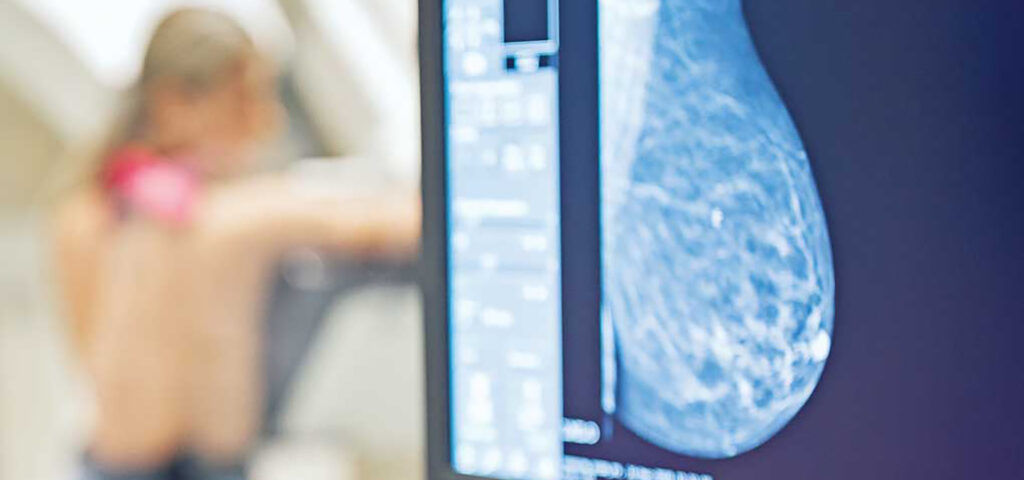
Breast cancer screening is a vital tool in early detection, but if you have dense breasts, your screening plan might need a more personalized approach. Breast density not only increases the risk of breast cancer but also makes it more difficult for traditional mammograms to detect abnormalities. Understanding your screening options can help ensure the most accurate results and peace of mind.
What Are Dense Breasts?
Breast density refers to the amount of fibrous and glandular tissue compared to fatty tissue in the breast. Dense breasts are common—nearly 50% of women over 40 have them. The challenge? On a mammogram, both dense tissue and tumors appear white, making it harder to spot potential issues.
Why Breast Density Matters
Women with dense breast tissue face two challenges:
- Increased Breast Cancer Risk: Research shows that dense breasts can increase the risk of developing breast cancer by up to four to six times.
- Reduced Mammogram Sensitivity: Standard 2D mammograms may miss up to 50% of cancers in dense breast tissue.
Because of this, supplemental screening options are often recommended for women with dense breasts.
Screening Options for Dense Breasts
1. Digital Mammography (2D & 3D Tomosynthesis)
While traditional 2D mammograms are still commonly used, 3D mammography (tomosynthesis) offers improved accuracy for women with dense tissue. This advanced technology captures multiple images from different angles, providing a clearer, more detailed view.
Benefits:
- Increases cancer detection rates
- Reduces false positives
- Improves accuracy in dense breasts
2. Breast Ultrasound
A breast ultrasound uses sound waves to create images of the breast. It’s especially effective as a follow-up test to mammograms for women with dense breasts.
Benefits:
- No radiation
- Can distinguish between solid masses and fluid-filled cysts
- Useful for evaluating specific areas
3. Breast MRI (Magnetic Resonance Imaging)
Breast MRI is typically recommended for women at high risk of breast cancer, including those with dense breasts and a family history. It’s a highly sensitive screening tool that uses magnets and radio waves instead of radiation.
Benefits:
- Detects small tumors not seen on mammograms or ultrasounds
- Provides detailed images of breast tissue
- Especially useful for women with a genetic predisposition
4. Molecular Breast Imaging (MBI)
MBI is a newer technique that uses a radioactive tracer and a special camera to detect cancer cells in dense tissue. While not widely available, it shows promise for women with dense breasts.
Benefits:
- Detects cancers missed by mammograms
- Lower false-positive rate compared to MRI
Which option is right for you?
If you have dense breasts, ask your healthcare provider about your personal risk factors and the most appropriate screening strategy. Regular screenings can lead to earlier detection and better outcomes.
Dense breast tissue doesn’t have to be a roadblock to early detection. With advanced imaging options like 3D mammography, ultrasound, and MRI, women have more tools than ever to stay ahead of breast cancer. We encourage all women to prioritize regular breast screenings, including 3D mammography when appropriate. You can schedule your 3D mammogram today by calling 863-419-8832 or visiting our mammography page for more information: https://atradiology.cc/services/3d-mammography/